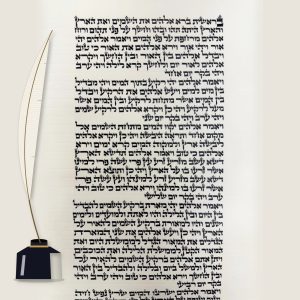
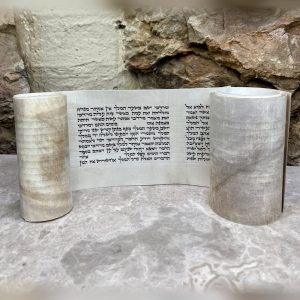
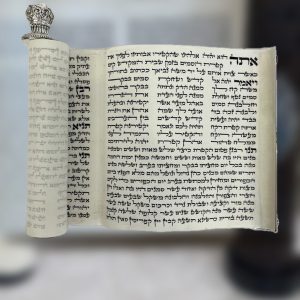
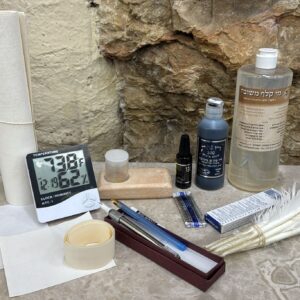
In the craft of STaM (Torah scrolls, tefillin and mezuzot), parchment is not just “paper”. It is an animal hide that has gone through a demanding process of cleaning, liming, stretching and finishing, all for the holy purpose of the mezuzah mitzvah. Fine parchment can be the difference between a mezuzah that lasts for decades and one that may become invalid (pasul) within a short time.
1. Quality of Processing: “Fine White Parchment”
Quality parchment is measured first and foremost by how it was processed.
- Ink absorption: Parchment that was not processed properly may be too “oily” (the ink won’t hold) or too “thirsty” (the ink spreads and blurs, an effect scribes call “feathering”). Fine parchment lets the ink sit on the surface – sharp, black and crisp.
- Durability outdoors: Mezuzot are often exposed to humidity and heat in doorways. Quality parchment is processed so it won’t shrink, crack or yellow quickly, which helps keep the letters kosher for many years.
2. The Importance of Precise Ruling (Sirtut)
Jewish law requires a mezuzah to be ruled – a mezuzah written without sirtut is not kosher. Beyond the ruling itself, its quality matters a great deal:
- Lines straight as a ruler: Good, professional ruling gives the scribe a reliable “track”. When the lines are perfectly straight, the whole mezuzah looks harmonious and orderly, which also makes proofreading and reading easier.
- Depth of the ruling: Good ruling should be felt without tearing the fibers of the parchment. Precise scoring helps the scribe keep the letters at an even height, so they “hang” from the line perfectly.
3. Beauty and Hiddur: “This Is My God and I Will Glorify Him”
There is a mitzvah to beautify the mezuzah. Fine parchment has a smooth, velvety texture and an even tone.
- Clean parchment: Good parchment is free of spots, scratch marks and tiny holes. On clean, white parchment the black lettering stands out in its beauty and conveys dignity and holiness.
- Comfort for the scribe: On fine parchment, the quill glides. That comfort translates directly into deeper concentration and greater precision in writing the holy Names, without the distraction of technical difficulties.
4. The Writing Comes Out More Mehudar and Refined
When the parchment is fine and the ruling is precise, the writing itself comes out more mehudar (beautiful and meticulous) and refined.
- Sharp, precise letters: On smooth, well-processed parchment the ink is absorbed evenly, so the scribe can give every letter its full form – the crowns (tagin) and fine strokes come out sharp and clear.
- Even, beautiful script: Precise ruling keeps an even height and equal spacing between letters, words and lines, so the whole mezuzah looks like one harmonious piece.
- Fewer corrections: When the ink doesn’t spread and the parchment doesn’t flake, there is less need for scraping and corrections, and the mezuzah stays clean and mehudar.
5. Kashrut Begins with the Raw Material
In the end, fine parchment comes from workshops that process the hides “lishmah” (for the sake of the mitzvah) under strict supervision. Using such parchment gives both the buyer and the scribe peace of mind that the mitzvah was done in the best possible way – from the first stage of processing the hide to the very last letter.
Learn more: What Is a Mezuzah? Meaning, Blessing, How to Hang It and Kosher Mezuzah Scrolls | See all mezuzot and mezuzah cases