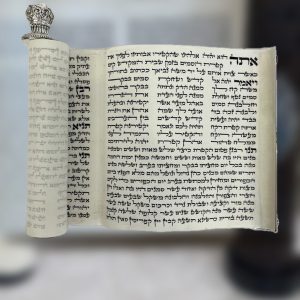
Every Purim, Jews around the world gather to hear “the Megillah.” But what exactly is a Megillah, where does it come from, and who wrote it? Here are clear, short answers.
What Does “Megillah” Mean?
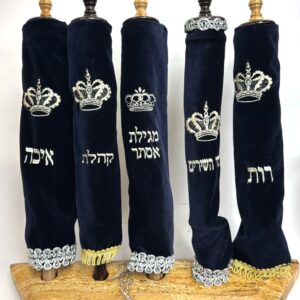
“Megillah” is Hebrew for scroll. The Bible contains five Megillot – Song of Songs, Ruth, Lamentations, Ecclesiastes and Esther – but when people say “the Megillah,” they almost always mean Megillat Esther, the Book of Esther, which is read on Purim. (The English expression “the whole Megillah,” meaning a long, detailed story, comes from the length of this reading.)
What Is the Story of the Megillah?
Megillat Esther tells how the Jews of the Persian Empire were saved from Haman, the king’s advisor, who plotted to destroy them. Thanks to Queen Esther and Mordechai, the decree was overturned, and the holiday of Purim was established. One special feature: God’s name does not appear in the Megillah at all. Many explain that the story teaches about hidden Divine providence – a miracle that happens behind the scenes, through events that look natural.
Is the Megillah Part of the Bible?
Yes. Megillat Esther is in Ketuvim (Writings), the third section of the Tanakh, as one of the five Megillot. It has 10 chapters and 167 verses.
Who Wrote the Megillah?
According to tradition, it was written by Mordechai and Esther. The Megillah itself says: “And Mordechai wrote these things” (Esther 9:20) and “Then Queen Esther… and Mordechai the Jew wrote” (Esther 9:29). The Talmud (Bava Batra 15a) adds that the Men of the Great Assembly – the Sages at the beginning of the Second Temple period – “wrote” the Megillah, meaning they set its final text and included it in the holy books. The Talmud (Megillah 7a) also relates that Esther asked the Sages to “write me for the generations.”
When and Where Did the Story Take Place?
In Shushan (Susa), one of the capitals of the Persian Empire, in what is today southwestern Iran, during the reign of King Achashverosh – after the destruction of the First Temple and before the completion of the Second. Most scholars identify Achashverosh with the Persian king Xerxes I, who reigned in the 5th century BCE. The story spans about nine years, from the “third year” of the king’s reign (1:3) to the “twelfth year” (3:7).
What Makes a Megillah Kosher?
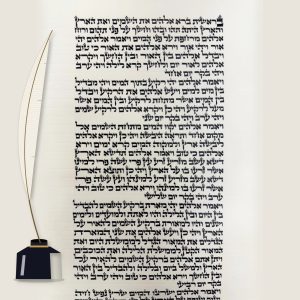
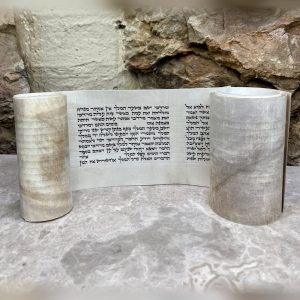
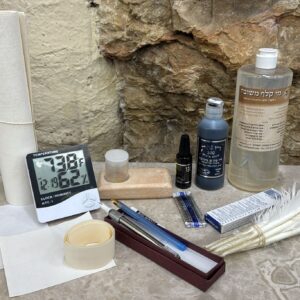
To fulfill the mitzvah of reading the Megillah on Purim, it must be handwritten by a certified sofer (scribe) on parchment, with ink, just like a Torah scroll. A printed Megillah is fine for study, but it cannot be used to fulfill the mitzvah. That is why a kosher Megillah is an investment for many years – used every Purim.
A Kosher Megillah for Your Home or Synagogue
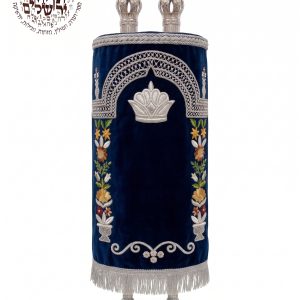
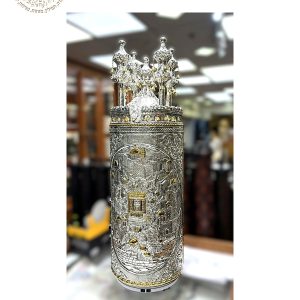
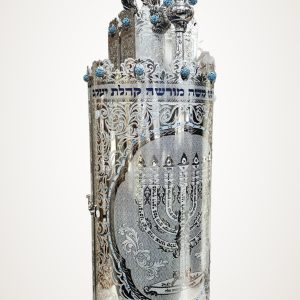
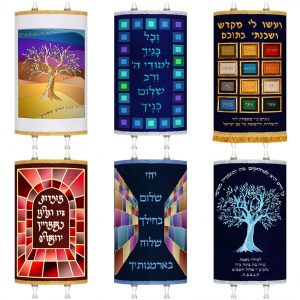
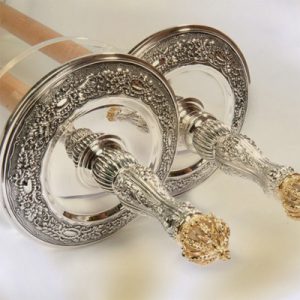
Scribes still copy the Megillah by hand today, exactly as they did centuries ago. At Torah Scrolls Jerusalem we carry a wide selection of kosher Megillot Esther, starting at ₪3,900 (about $1,150).
Our showroom is at Ramot Mall, 255 Golda Meir Street, 2nd floor, Jerusalem. Phone: +972-2-582-8096 or +972-54-420-1516.